
 By
By 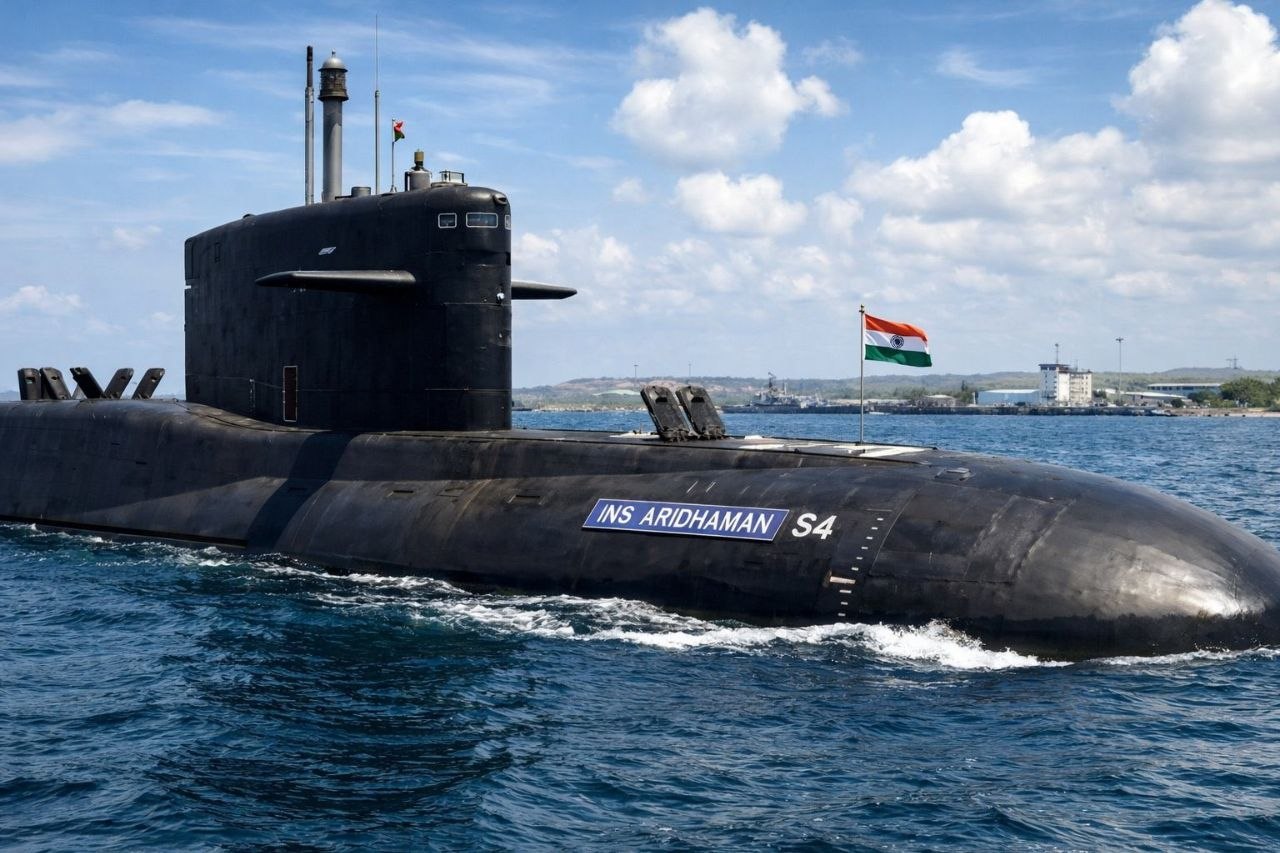
In a significant but characteristically low-profile move, on 3rd April, India has formally commissioned its third indigenously built nuclear-powered ballistic missile submarine (SSBN), INS Aridaman, into the Indian Navy. The induction, which took place on Friday, April 3, was not accompanied by a formal government press release, following a long-standing tradition of secrecy surrounding the nation’s strategic SSBN program.
While the Ministry of Defence maintained official silence, Defence Minister Rajnath Singh all but confirmed the induction through a brief, poetic and cryptic post on social media in Hindi: “Shabd nahi, shakti hai ‘Aridaman” (Aridaman isn’t just a word, it is power).
The secret commissioning ceremony probably was held at the Ship Building Centre in Visakhapatnam, the primary hub for India’s Advanced Technology Vessel (ATV) project. In all probability, the event was attended by Singh and top naval officials shortly after he commissioned the advanced stealth frigate INS Taragiri on the same day at the same location.
With the induction of INS Aridaman, India now operates three Arihant-class nuclear submarines, joining INS Arihant (commissioned in 2016) and INS Arighaat (commissioned in 2024). This marks a major step toward achieving Continuous At-Sea Deterrence (CASD), ensuring that at least one nuclear-armed vessel is always on patrol.
Key Features of INS Aridaman:
- Enhanced Scale: At 7,000 tonnes, Aridaman is larger and more advanced than its predecessors.
- Increased Firepower: It features eight vertical launch tubes—double the capacity of INS Arihant—allowing it to carry up to eight K-4 ballistic missiles (3,500 km range) or 24 K-15 missiles (750 km range).
- Indigenous Core: The vessel is powered by an 83 MW pressurized light-water reactor and boasts over 90% indigenous content.
India remains one of only six nations—alongside the US, Russia, UK, France, and China—to possess operational nuclear-powered ballistic missile submarines. The vessel will now be placed under the command of the Strategic Forces Command (SFC) to serve as the ultimate insurance policy for India’s ‘No-First-Use’ nuclear doctrine.
 admin
admin